Phone cluster control is one person using one computer to hold dozens or hundreds of phones: log in in bulk, send tasks in bulk, and read results in bulk.
The technology is neutral, and compliance follows the scenario
Phone cluster control and batch automation are tools. Whether they are compliant depends on what you do with them.
| Scenario class | Typical use | Compliance judgement |
|---|---|---|
| Automated testing | Batch regression on real devices, compatibility testing | Clearly compliant |
| Device management | Batch initialisation and batch upgrades in a device room | Clearly compliant |
| Operating your own business | Managing your own accounts, batch listing and delisting | Depends on platform rules |
| Data collection | Collecting and analysing public data | Depends on the nature of the data |
| Gray-market use | Farming accounts in bulk, fake traffic, inflating volume | Illegal / breach of contract |
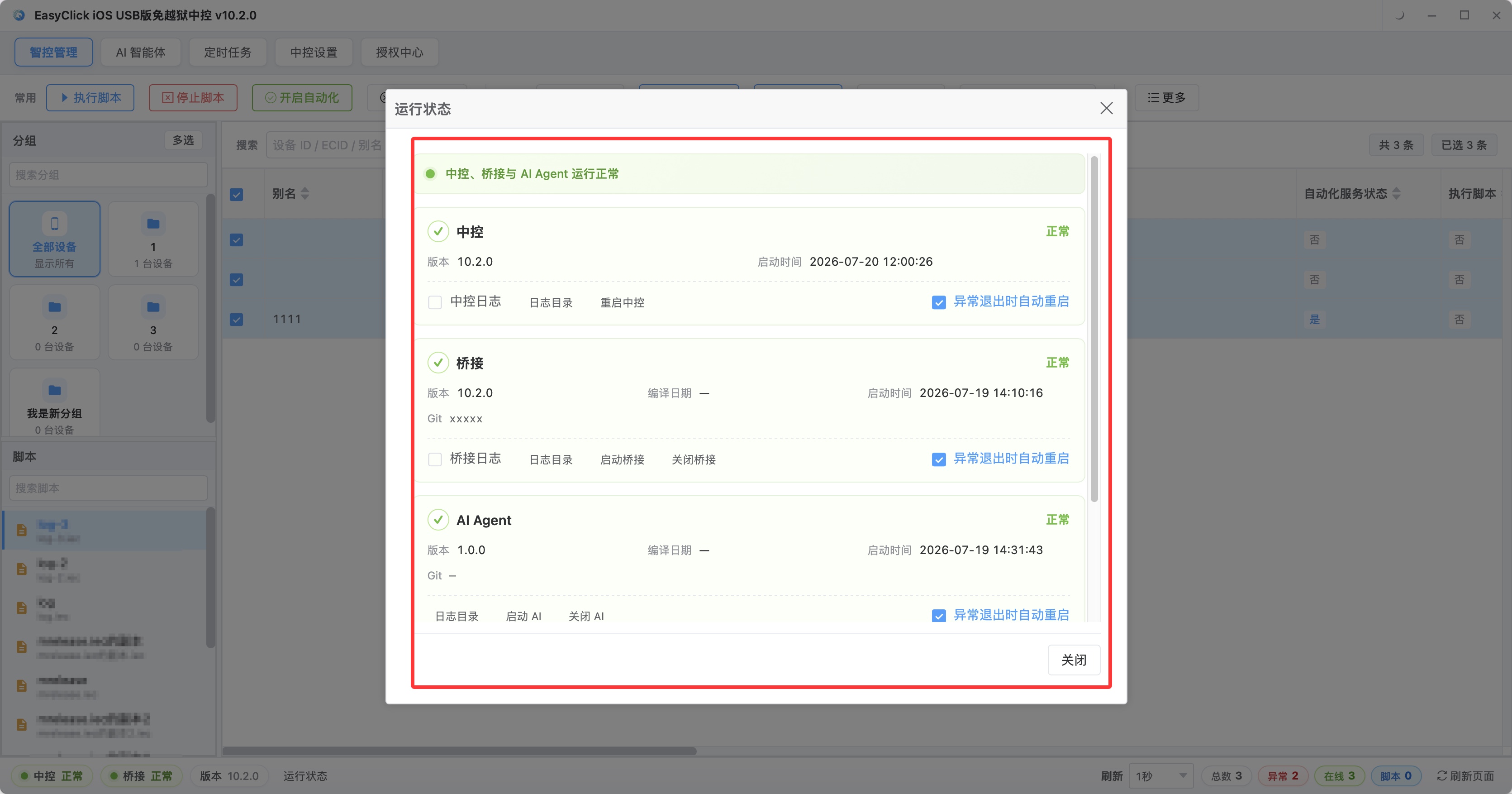
In actual management, you need to be able to look up what each device did at what time, and at what frequency. EasyClick’’s real-time logs and task panel record the trigger, execution time, target device, operation steps, and result, so an internal review or a response to a platform check can produce the record. Testing your own app, managing your own devices, and operating your own accounts is cluster control doing those jobs more efficiently. Account farming, inflating volume, and manufacturing fake data go against platform rules. Under domestic law, related disputes often land in unfair competition, personal-information protection, and cybersecurity. The specific finding depends on the conduct, the platform rules, and the case. This article is not legal advice. For a significant question, consult a professional lawyer.
When cluster control is acted on, the first thing many people meet is the platform terms of service. Using the platform’‘s service is treated as agreeing to those terms. The most direct result of a breach is a ban or a removal, and only serious cases rise to the law. When you start a project, read the target platform’’s terms of service and risk-control notes first. Whether something can be done is a three-step look. First the object: if the accounts and devices are not your own, stop. Then the behaviour: if it is account farming, volume inflation, or bypassing risk control, which the platform forbids, stop. Last the frequency: whether the rhythm is close to a real person operating. When all three pass, the scenario is mostly inside the compliance range.
Four red-line scenarios, and none of them to touch
Four red lines need to be drawn clearly. First, farming accounts in bulk: registering and maintaining a large number of accounts for traffic and inflated volume. Many platforms forbid it explicitly, and serious cases may be found to be unfair competition. Second, fake traffic: manufacturing fake plays, likes, transactions, and comments. It breaks platform rules, and it can also break the law. Third, bypassing risk control: cracking and bypassing a platform’‘s protection mechanisms. Technically that is a violation, and it may also involve legal risk such as damaging a computer information system. Fourth, infringing other people’‘s rights: collecting other people’‘s non-public data without authorisation, and scraping other people’’s personal information. Farming accounts in bulk and fake traffic both manufacture distortion, so the data the platform sees does not represent real user behaviour. These four are the floor. Before a project starts, look at this: after the automation runs, do the business records still reflect real operations, or do they exist only to make the numbers look better.
| Red-line scenario | Platform-side consequence | Possible legal risk |
|---|---|---|
| Farming accounts in bulk | Ban, removal | Liability related to unfair competition |
| Fake traffic | Throttling, ban | Liability related to false advertising |
| Bypassing risk control | Account action, device blocklist | Risk in the category of damaging a computer information system |
| Infringing other people’’s rights | Account action | Liability related to personal-information protection |
The table above is a pointer to the direction of risk. Specific consequences follow platform rules, regulatory findings, and judicial practice.
How platform risk control works, and how legitimate scenarios are done
A lot of people ask what frequency is safe. Start with how platform risk control usually recognises a person. Behaviour fingerprint: the platform builds a behaviour profile for each account, including login time, operation interval, tap rhythm, and content preference. If automated operations have a highly consistent rhythm, they are easy to mark. Device and network linkage: many accounts active at high frequency on the same device, the same IP, and the same WiFi form a link between devices and accounts. Farming accounts in bulk is often recognised this way. Content features: similar content, identical wording, and low-quality content published in bulk get demoted or throttled on the content side first.
| Signal | What it means | How to stay clear |
|---|---|---|
| Fixed-rhythm operation | Tap intervals almost identical every time | Add natural fluctuation to the rhythm |
| High-frequency account switching on one device | Abnormal account-to-device linkage | Keep a reasonable device ratio |
| Heavy activity on one IP | Network linkage | Rotate across network environments |
| Highly similar content | Low-quality bulk content | Differentiated content |
| Bulk operations late at night | Abnormal active hours | Stay close to a real person’’s schedule |
These signals do not necessarily trigger risk control on their own. Stacked together, they get a closer look. Keep frequency close to a real person, spread operation times, and let the rhythm fluctuate naturally. Keep a reasonable ratio of devices to accounts, and avoid crowding a large number of accounts onto a few devices with high-frequency switching. Content and behaviour have to be real: the content differs, the interaction is genuine, and automation only carries out what was set. There is no universal number for frequency. It depends on platform rules, account weight, and the business shape. The steadier approach is to design the rhythm with reference to real human behaviour, and to be conservative in the early period after launch. You can give each account its own timetable, put operation intervals in a random range, for example a random value between 3 and 8 seconds, and avoid a fixed 5 seconds. Avoid concentrating operations on the hour and at the instant of a big promotion. New accounts start strict. Record the time distribution of each batch operation, and review it regularly for a mechanical pattern. The method is to keep intervals, schedule, and content close to a real person, and to leave anti-detection logic unwritten.
Each legitimate scenario has its own method. Automated testing is the lowest risk: you are testing your own app on your own devices, and platform rules are not involved. Keep the test-account rhythm from looking abnormal, and keep the test environment isolated from production where you can. Device management is essentially enterprise asset management: legal sources, a clear purpose, an operation trail, and a link to the asset ledger. Operating your own accounts means checking the target platform’‘s terms item by item, keeping a rhythm close to a real person, and keeping multi-open clones from being stacked on top of account farming. Data collection takes only publicly visible data, at a restrained frequency, for legitimate analysis. Respect platform terms and the robots protocol, do not bypass login and CAPTCHA, and keep the collection scope as small as you can. Using the results for internal business analysis is fine. Disclosing them outside, or reselling other people’’s data, can meet a legal problem. Keep a data-use ledger.
| Scenario | Key rule | Risk |
|---|---|---|
| Automated testing | Test your own app, isolate the environment | Low |
| Device management | Legal source, operation trail | Low |
| Operating your own accounts | Check the terms, human-like rhythm | Medium |
| Data collection | Public data, restrained frequency, minimised scope | Medium |
Records in the system, and a self-check list before a project
Once cluster control reaches company scale, it needs a system. At project start, write down the scenario, the data scope, and the operation frequency, and pass a review first. Register accounts and devices clearly: who is using them, how many, and for what. Keep script execution logs, account operation records, and exception-handling records for audit. When platform rules or the business change, review once a quarter. The vendor needs clear anti-gray-market terms, and has to be able to cooperate with an audit. Responsibility lands on a person: the business owner is responsible for the scenario and the data scope, and approves the project; the script developer does not write logic that bypasses risk control or simulates fake behaviour; the person using it is responsible for the operation rhythm and for reporting exceptions; legal or compliance updates the platform-rule list on a schedule and organises the review. A small team with no dedicated legal function should at least put project approval, records, and review in place.
A few compliance documents are worth keeping:
| Document | Contents | Update rhythm |
|---|---|---|
| Scenario list | Scenario, data scope, and frequency for each automation project | At project start |
| Platform rule cross-check | Terms on the target platform that relate to automation | After a platform update |
| Operation log | Script execution, account operations, exception-handling records | Ongoing |
| Review notes | Conclusions and fixes from each compliance review | Quarterly |
Before a project goes up, check yourself against this list: Is it used to test your own app or manage your own devices? Have you read the target platform’’s terms of service and risk-control rules item by item? Does the operation frequency match real user behaviour? Is every piece of collected data public? Are operation logs kept for audit and evidence? Does the vendor have clear anti-gray-market terms and technical support? Are account and device ledgers and a project-approval mechanism in place? Is a regular compliance-review rhythm set? If any item is unmet, fill it in before launch.
About EasyClick: A mobile automation script development platform covering three phone ecosystems: Android without root, iOS without jailbreak, and HarmonyOS. It also offers Apple script writing, Apple cluster control, Android cluster control, remote cloud control, and AI phone cluster control. → Explore all products
Ready to build it for real?
Every approach in this article can be built on the EasyClick phone automation platform — full documentation, developer tools and cluster/cloud-control products, free to try.